
Every August, the city of Kandy in Sri Lanka transforms into a vibrant hub of color, music, and devotion during one of the world’s most spectacular cultural celebrations, the Kandy Esala Perahera. This grand festival is not just a visual feast of beautifully decorated elephants, traditional Kandyan dancers, and rhythmic drummers; it is a living expression of Sri Lanka’s rich history, deep rooted Buddhist traditions, and cultural pride.
Travelers attending the festival get a rare opportunity to witness centuries-old rituals, connect with local spirituality, and experience the energy and pageantry that make this event truly unforgettable. For anyone planning a trip to Sri Lanka in August, the Kandy Esala Perahera is a must-see cultural experience.
What is the Esala Perahera?
Also known as the Festival of the Tooth, the Esala Perahera is a traditional procession held to honor the Sacred Tooth Relic of Lord Buddha. Dating back over 300 years, it is one of the oldest and most colorful Buddhist festivals in Sri Lanka. The festival features dazzling parades, vibrant costumes, mesmerizing dances, and a showcase of the island’s cultural heritage and devotion.
When and Where is the Esala Perahera Held?
The festival is celebrated annually in July or August, during the Esala month of the Sinhala calendar. Lasting for 10 days, the processions grow grander each night, culminating in a breathtaking final parade that draws thousands of locals and travelers.
The main event takes place in Kandy, at the iconic Temple of the Sacred Tooth Relic (Sri Dalada Maligawa). The streets surrounding the temple are transformed into a vibrant spectacle of lights, music, and traditional performances.
Kandy Esala Perahera 2026: Event Dates
Here’s the schedule for 2026 so you can plan your visit:
- 1st Kumbal Perahera – 18th August
- 2nd Kumbal Perahera – 19th August
- 3rd Kumbal Perahera – 20th August
- 4th Kumbal Perahera – 21st August
- 5th Kumbal Perahera – 22nd August
- 1st Randoli Perahera – 23rd August
- 2nd Randoli Perahera – 24th August
- 3rd Randoli Perahera – 25th August
- 4th Randoli Perahera – 26th August
- Final Randoli Perahera (Grand Finale) – 27th August
- Diya Kapeema (Water Cutting Ceremony) – 27th August
- Dahawal Perahera (Day Procession) – 28th August
The Processions: Kumbal, Randoli & Maha Randoli
Kumbal Perahera (Kumbal Procession)
The festival begins with the Kumbal Perahera, a semi procession meant to drive away evil spells and ill will. Traditionally shown to children, it runs through the streets of Kandy for five days. Unlike later processions, the Nilames (chiefs) do not walk, and only drummers and tuskers participate without ceremonial costumes. It may be considered a smaller procession, but it marks the spiritual beginning of the festival.
Randoli Perahera (Randoli Procession)
The Randoli Perahera is the main procession of the Sacred Tooth Relic, parading the streets for five consecutive nights. Historically, the chief queens of the kings participated in palanquins. Today, queens no longer participate, but decorated palanquins are carried in their honor. Four Devalas (temples) also parade their palanquins with religious artifacts, maintaining the ceremonial and religious significance of the event.
Maha Randoli Perahera (Grand Finale)
The festival reaches its peak with the Maha Randoli Perahera, the grand finale. Tuskers are adorned with gold-stitched garments and garlands, while drummers wear full ceremonial costumes. The Diyawadana Nilame, the chief custodian of the Tooth Relic, adds further grandeur with a newly stitched ceremonial costume. This final night is the most spectacular, showcasing centuries-old traditions in full glory.
Activities and Cultural Highlights
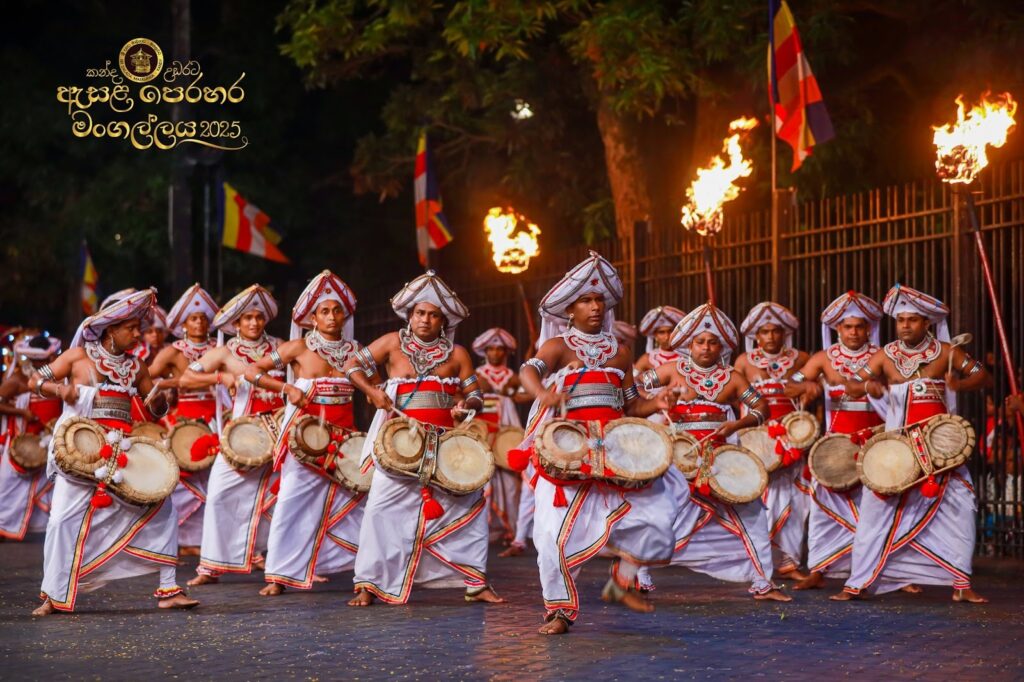
Travelers to the Esala Perahera can witness:
- Traditional Kandyan dancers, performing intricate and energetic routines
- Fire dancers, amazing crowds with daring acts of skill
- Drummers and musicians, filling the streets with mesmerizing rhythms
- Decorated elephants, carrying the Sacred Tooth Relic on a ceremonial casket
- Cultural displays, including whip-cracking and torchlight processions
Why the Esala Perahera is Special to Sri Lankan Culture
The Esala Perahera is more than a colorful parade; it is a living celebration of Sri Lanka’s heritage, art, and devotion. Through its music, dance, and rituals, it unites people from all walks of life, creating a sense of community and shared pride. Deeply rooted in Buddhist tradition, the festival honors the Sacred Tooth Relic, making attendance or participation a spiritual journey. Beyond the spectacle, the event symbolizes blessings, prosperity, and protection, reflecting Sri Lanka’s timeless respect for its culture and faith.
Historical Significance
The Kandy Esala Perahera has a rich history intertwined with Sri Lanka’s religious and cultural identity. The festival’s origins are documented in Buddhist literature, with the Perahera concept becoming popular during the reign of Emperor Asoka of India.
Today’s festival blends Buddhist and Hindu customs, showcasing the enduring value of Sinhala culture. Many rituals are based on statutes from the “Dalada Siritha” (Dantha Dhathu Charitha), written during the reign of Parakramabahu IV (1302–1326). These statutes outline sacred traditions, including:
- Cleaning and decorating the Shrine Room of the Sacred Tooth Relic
- Offering rice, flowers, and oil lamps
- Parading the Tooth Relic with utmost reverence
- Participation of the king, ministers, priests, and public in annual rites
Originally performed to invoke rain for the harvest, the festival evolved into a grand ceremonial procession honoring the Sacred Tooth Relic. These age-old rituals continue today, giving visitors a rare glimpse into Sri Lanka’s historical and spiritual legacy.
About the Temple of the Sacred Tooth Relic
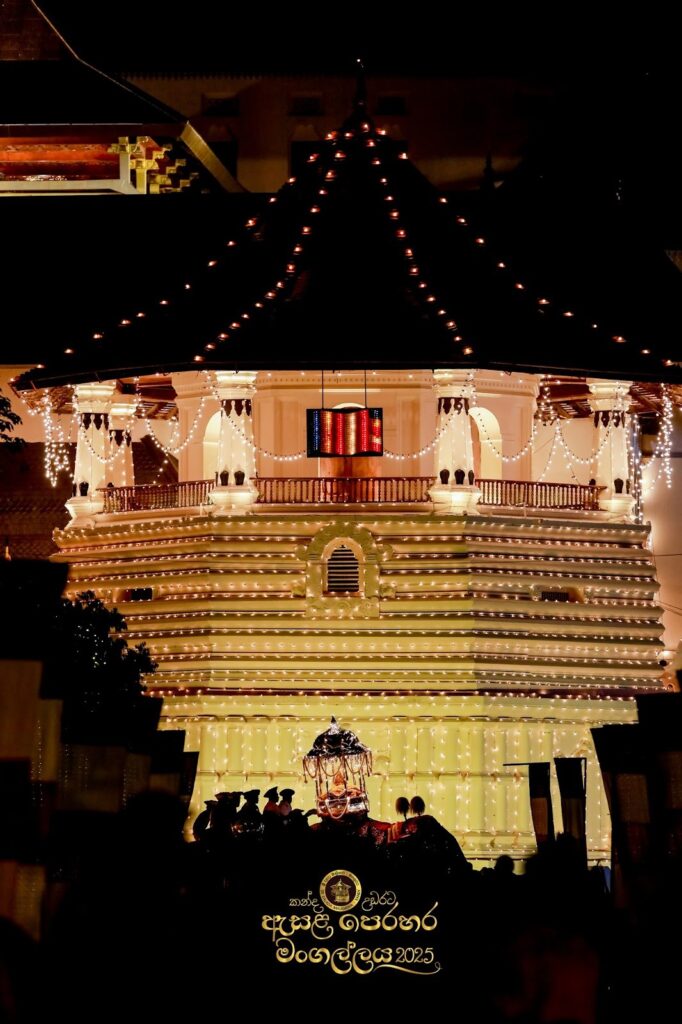
The Sri Dalada Maligawa (Temple of the Tooth) in Kandy houses the Sacred Tooth Relic of Lord Buddha, one of the most important Buddhist relics in the world. The Perahera is a way to pay homage to this revered relic, combining devotion with spectacular visual artistry.
The Elephants of Esala Perahera
Elephants are the soul of the festival, with 60 – 70 majestic tuskers participating each year. They come from temples, private owners, and families across Sri Lanka, and are well cared for, never forced or bothered. Many are guardian elephants of temples and treated with utmost respect.
The lead elephant, known as the Maligawa Tusker, carries the casket with the Sacred Tooth Relic, while others parade beautifully decorated with traditional garments, lights, and ornaments. Some elephants hold special historical significance, such as “Raja” and “Nadungamuwa Atha”. Raja, revered for decades of service, has a statue at Dalada Maligawa, and visitors can see his room displaying his natural skin, memorabilia, and photos of special events, offering a unique glimpse into the life of this legendary tusker.
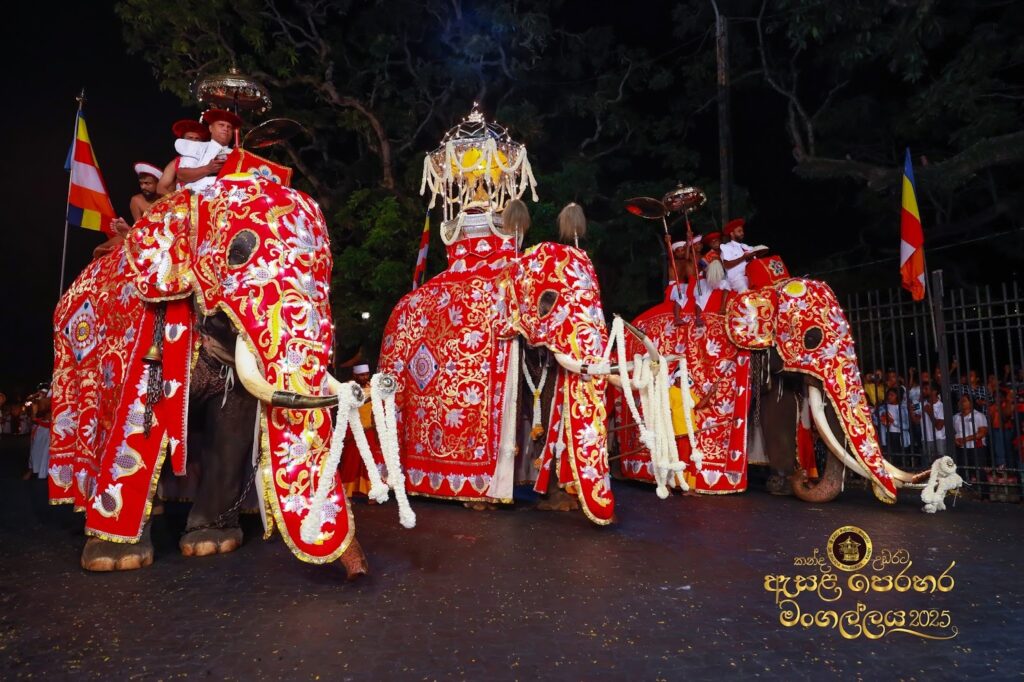
These elephants symbolize strength, dignity, devotion, and cultural pride, forming one of the most iconic sights of the Kandy Esala Perahera.
Tips for Travelers Watching the Kandy Esala Perahera
Experiencing the festival is unforgettable, but large crowds require careful planning:
Accommodation & Viewing Seats
- Stay near Kandy city for easier access to processions
- Pre-book viewing seats, especially for the grand finale, for comfort and convenience
Booking Seats for 2026
- Online Platforms: MyTickets.lk for official bookings
- Specialized Tour Agents: Cross Country Travels Sri Lanka offers reserved seating
- Facebook & Local Agents: Check official listings like “Kandy Perahera Viewing Galleries” or The Prince Of Wales Kandy (Pvt) Ltd
- Hotels/Travel Agents: Many top-tier hotels can arrange tickets
Important Tips:
- Book 3–5 months in advance for the best spots
- Choose galleries along Dalada Veediya and Yatinuwara Veediya
- Prices vary depending on date and gallery location
- Expect crowds and heavy traffic
- Processions usually run 7:00 PM – 11:00 PM
- Wear comfortable clothes and shoes
- Bring snacks & water
- Keep children safe in the crowds
- Arrive early to secure prime spots
Attending the Kandy Esala Perahera is more than watching a festival, it is a journey through living tradition, a spiritual experience, and a grand celebration of Sri Lankan culture. From the rhythmic drumming and graceful dancers to the majestic elephants and sacred rituals, every moment is a feast for the senses.
Whether you are a first time visitor or returning to witness its splendor, the vibrant energy, intricate performances, and centuries-old traditions make the Perahera an unforgettable highlight of any Sri Lanka trip.
Plan your August 2026 visit, secure your seats in advance, and immerse yourself in one of the most extraordinary cultural festivals in the world, an experience you will treasure forever.